
We use the toilet every single day. It is the most critical fixture in your home for sanitation and comfort. When you buy a cheap, poorly designed toilet, you are signing up for years of clogs, leaks, and frustrating maintenance.
Choosing the right toilet isn’t just about aesthetics; it is about engineering and daily reliability.
If you want to stop wasting money on bad plumbing, you need to know exactly what to look for before you buy. Here is our expert guide on how to spot high-quality craftsmanship and choose the perfect model for your bathroom.
The 8-Point Toilet Quality Inspection Checklist
Do not just look at the price tag. When you are standing in the showroom, use these eight physical checks to separate the premium fixtures from the cheap plastics.
-
1. Test the Weight: High-quality porcelain is dense. A standard, cheap toilet weighs around 50 kg (110 lbs), while a premium, high-density toilet weighs closer to 100 kg (220 lbs). Lift the heavy tank lid—if it feels substantial, the quality is likely good.
-
2. Inspect the Sewage Outlet: Look for a toilet with a single, dedicated sewage outlet. Some brands include 2 or 3 to fit different pipes, but this weakens the flush suction. Choose a single outlet (down-drain or horizontal) that matches your specific bathroom plumbing.
-
3. Measure the Trapway Caliber: The wider the internal drain (trapway), the lower your chance of clogs. You should be able to easily fit your entire palm into the bottom sewage outlet.
-
4. Feel the Glaze: A premium toilet is glazed everywhere, including inside the hidden trapway. Reach inside the drain hole; if it feels rough, do not buy it. Rough ceramics catch waste and cause massive clogs over time.
-
5. The Button Sound Test: The internal water valves determine the lifespan of your toilet. Press the flush button on top of the tank. If it makes a sharp, crisp clicking sound, the internal components are high quality.
-
6. Listen to the Flush: A good toilet refills quickly and quietly. If the tank sounds like a roaring engine when it pumps water, the internal valves are cheap.
-
7. The Blue Ink Leak Test: Once installed, drop a little blue food coloring or ink into the top water tank. Do not flush. If you see blue water slowly seeping into the main bowl, the flapper valve is leaking and wasting your money.
-
8. Upgrade the Lid Material: Standard plastic lids are flimsy and crack easily. Always look for a lid made from “engineering plastics” (like Urea-Formaldehyde or heavy-duty PP). They are scratch-resistant, more comfortable, and incredibly durable.
One-Piece vs. Two-Piece vs. Wall-Mounted: Which is Best?
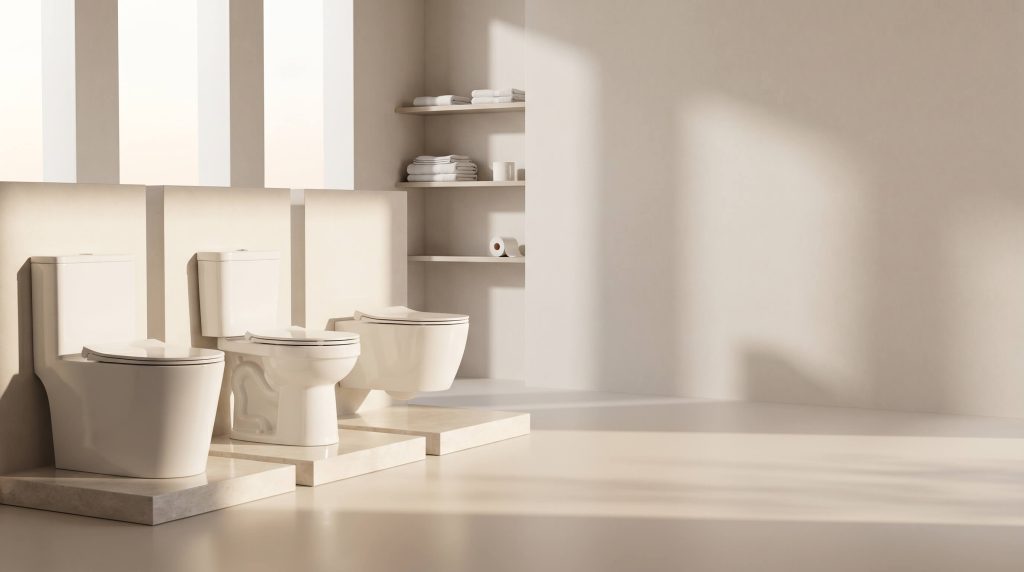
Beyond build quality, you have to choose the right structural design for your specific bathroom space and budget. Here is the breakdown of the three main types on the market today.
The Two-Piece (Split Type): The Budget Workhorse
This is the traditional design where the water tank is bolted to the base using screws and rubber seals.
-
The Pros: Excellent water pressure and flushing momentum. It is highly affordable and comes in endless styles.
-
The Cons: It is bulky and hard to clean. Dirt and bacteria get trapped in the seam between the tank and the bowl. The rubber seals are also prone to leaking over time.
-
Best For: Older homes with low water pressure, or homeowners on a strict renovation budget.
The One-Piece (Conjoined Type): The Modern Standard
The base and the water tank are molded together seamlessly into a single piece of porcelain.
-
The Pros: Sleek, modern, and incredibly strong. Because there are no seams or gaps, it takes seconds to wipe down and sanitize.
-
The Cons: They are generally more expensive than two-piece models and can be heavy to move.
-
Best For: Modern bathroom renovations where aesthetics and easy, hygienic cleaning are the top priorities.
The Wall-Mounted Type: The European Minimalist
The water tank is hidden completely behind the wall, leaving only the bowl floating above the floor.
-
The Pros: Saves massive amounts of floor space, runs almost silently, and completely eliminates floor-level cleaning blind spots.
-
The Cons: Extremely expensive. You must build a “false wall” to hide the tank. Expert Tip: We generally do not recommend these for standard homes. If an internal part breaks, you may have to tear open your wall just to fix a simple leak.
-
Best For: High-end luxury builds with a massive budget and ultra-compact spaces.
Final Thoughts on Your Bathroom Upgrade
Your toilet dictates your daily comfort. By testing the weight, feeling for a fully glazed trapway, and choosing the right structural design, you guarantee a clean, clog-free bathroom for the next decade. Your bathroom renovation doesn’t stop here, though. To complete your perfect space, check out our expert guides on How to Choose a Bathtub and Selecting the Perfect Faucet. Don’t forget to browse our other blog articles to master your next home improvement project!