
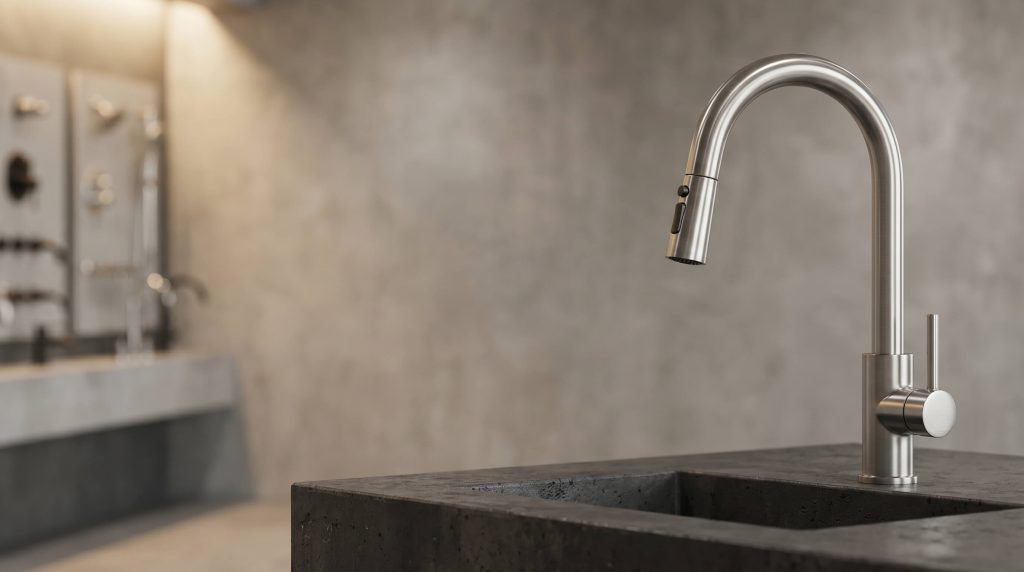
Water quality safety starts at the tap. If you import low-grade faucets, you are risking secondary water pollution and guaranteeing massive product return rates from angry customers.
Choosing the right faucet isn’t just about exterior design. It is about the internal engineering that prevents leaks, rust, and heavy metal contamination.
If you want to protect your brand reputation and your profit margins, you must know exactly how to inspect a factory’s plumbing hardware. Here is the executive breakdown of how to source premium faucets.
The Core Engineering: Valve Cartridges and Aerators
The valve core is the beating heart of any faucet. It dictates the lifespan of the fixture. Never settle for outdated roller-type valves from your supplier.
-
Ceramic Disc Valves: This is the modern gold standard. Demand ceramic cores for their superior wear resistance, flawless sealing, and complete elimination of leaks.
-
The Aerator (Bubbler) Test: A premium faucet always includes an aerator with a high-quality stainless steel mesh. This creates a soft, foamy water flow, prevents splashing, and filters out impurities.
Demystifying Faucet Materials: From 304 Steel to Cheap Zinc
Factories will constantly try to cut corners on raw materials to pad their own margins. Knowing the difference between premium steel and cheap alloys protects your bottom line.
-
304 Stainless Steel: The ultimate, premium choice. It is 100% lead-free, never rusts, and causes zero secondary water pollution. Because it is difficult to process, the price is higher, but the zero-defect rate is worth it.
-
Refined Copper (Brass): Highly durable with natural anti-bacterial properties. However, you must enforce strict lead-content standards with your factory to ensure it is safe for drinking water.
-
Zinc Alloy (The Trap): This is a low-grade material that oxidizes and rots from the inside out within one to two years. Factories use it for cheap handles. Avoid zinc bodies at all costs.
-
Ceramic & ABS Plastics: Ceramic offers a high-end, rust-proof aesthetic. ABS engineering plastic is a highly cost-effective, lead-free, and corrosion-resistant alternative for budget or commercial markets.
The Electroplating Standard You Must Demand
The electroplating dictates whether a faucet looks brand new or is completely covered in rust after a single year of use.
The international standard for electroplating thickness is 8 microns. Do not accept anything less. For premium, high-ticket fixtures, push your factory for 12 microns.
Demand a five-layer electroplating process. The best Chinese manufacturers will use three base layers of copper (hydrogen, pure, and acid copper), topped securely with nickel and chromium.
Where to Source Faucets in China: The 4 Major Bases
China has four major plumbing production hubs. Sourcing from the wrong region guarantees you will receive inferior quality.
-
Kaiping (Guangdong): The absolute top tier. If you want high-end, export-quality faucets and top brands, source your materials here.
-
Nan’an (Fujian): A strong second-tier manufacturing base producing solid plumbing fixtures for both domestic and global markets.
-
Yuhuan & Haicheng (Zhejiang): Yuhuan specializes mostly in valves and plumbing accessories. Haicheng is historically known for low-end, budget products, though some factories are slowly upgrading.
Navigating these regional factory tiers blindly is the fastest way to get scammed on material quality. Stop guessing about logistics. Get a Free Sourcing Quote from Huasourcing today.